
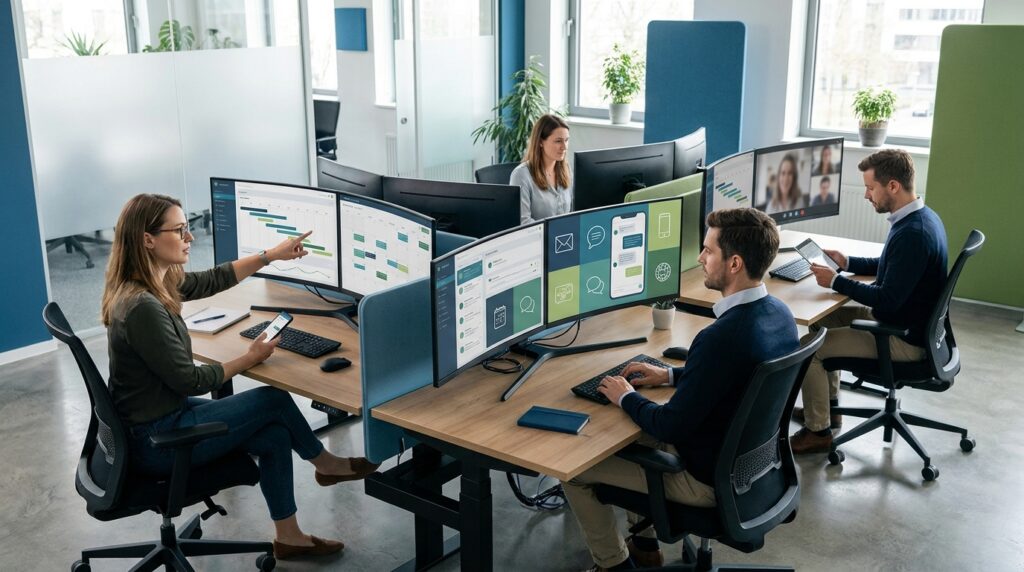
Service businesses lose time and money every day because of missed appointments. A customer forgets a dental visit, skips a salon booking, or misses a service call, and those empty time slots add up fast. They’re also hard to fill again at the last minute. Staff have to adjust schedules to cover gaps, while revenue drops as calendars suddenly shift. That’s one reason appointment reminder texts have become a common way for modern businesses to stay in touch with customers.
SMS works because people actually read text messages. Research from Notifyre shows average SMS open rates around 98%, with most messages seen within minutes. Busy customers usually notice a short reminder text faster than an email or voicemail, which also helps businesses get quicker replies. Short, direct messages are hard to miss, especially during a busy day.
Appointment reminder SMS systems now do much more than send simple alerts. Businesses use text reminders to confirm bookings, handle reschedules, answer customer questions, and cut down on no-shows across multiple locations. Platforms such as Sendmode also include tools for compliance, automation, and team messaging in one system.
This guide explains how appointment reminder texts work and why many businesses choose them over other communication methods. It also looks at how larger companies handle reminders across locations, along with methods that can improve results. You’ll also find information on compliance, personalization, automation, and AI-powered reminder workflows.
Why Appointment Reminder Texts Work So Well
People move fast, and most already check their phones all day. Emails stack up, and calls from unknown numbers are easy to skip. Text messages are usually seen much faster, which helps explain why appointment reminder SMS campaigns work so well.
Studies support that. Research shows automated reminder texts can cut no-show rates by 30% to 50% (ProactiveChart). An NIH-backed study comparing communication methods found SMS reminders had the lowest no-show rate at 1.9%. Phone calls reached 3.49%, while email reminders came in at 2.68% (PubMed Central).
|
Reminder Method
|
No-Show Rate
|
Key Insight
|
|---|---|---|
| SMS reminders | 1.9% | Lowest missed appointment rate |
| Email reminders | 2.68% | Moderate effectiveness |
| Phone call reminders | 3.49% | Higher missed appointment rate |
For healthcare providers, auto shops, fitness studios, beauty businesses, home service companies, and nonprofit organizations with busy calendars, missed appointments cause real problems. Empty time slots waste staff hours, interrupt schedules, and can slowly hurt customer satisfaction.
An overwhelming 97% of studies (28 out of 29) in a systematic review demonstrated that patient reminders effectively improved attendance rates.
Texting is also what many consumers already prefer. Research from Falkon SMS found that 70% of patients pick text messages for reminders and updates (Falkon SMS). Businesses that contact customers through familiar channels often get faster replies and deal with fewer scheduling problems overall.
Best Practices for Effective Appointment Reminder SMS Campaigns
Some reminder texts get quick responses, while others are ignored. The difference usually comes down to timing, wording, and whether the message feels useful to the customer receiving it.
The best appointment reminders stay short, clear, and easy to read. Customers should immediately know who sent the text, the appointment time, the location, and how to reply. If someone needs to read the message twice to understand what to do next, response rates often fall.
Most good reminders include:
- Customer name and appointment date
- Appointment time and business location
- Instructions for confirming, canceling, or rescheduling
- Simple reply options such as “Reply C to confirm”
Timing matters too. Many businesses send reminders 24 to 48 hours before an appointment because that timing works well for many industries. Same-day reminders are also helpful for salons, clinics, and repair companies where schedules change fast and customers often forget.
Personalized texts can also increase engagement. Falkon SMS reports that personalized SMS campaigns may raise response rates by up to 70% (Falkon SMS). Messages that feel personal usually work better than generic reminders.
|
Best Practice
|
Why It Matters
|
Recommended Approach
|
|---|---|---|
| Timing | Reduces forgetfulness | 24-48 hours before appointment |
| Personalization | Improves response rates | Use customer names and locations |
| Two-way replies | Simplifies rescheduling | Allow confirm or cancel responses |
| Concise messaging | Improves readability | Keep under 160 characters when possible |
Two-way texting also makes scheduling easier for customers. People may want to confirm details, ask a quick question, or reschedule without calling during business hours.
Research from Podium shows more businesses now combine scheduling, reminders, AI conversations, and automated rescheduling in one workflow (Podium). Staff spend less time managing manual follow-ups, while customers get an easier experience throughout the process.
Managing Text Appointment Reminders Across Multiple Locations
Running reminders for one location is manageable, and some businesses can still do it manually. But a franchise with 50 locations is dealing with a much bigger job. Staff need a system that handles high message volume without creating extra admin tasks every day.
Centralized reminder platforms help teams manage messaging from one dashboard while still keeping texts tied to each location. Customers are also more likely to trust reminder messages that come from a familiar business number or a local area code. That may sound small, but response rates often improve because the message feels more familiar and personal.
Franchise groups, healthcare networks, churches, and nonprofits also need communication policies that stay consistent across every site. Operations teams usually want shared reporting, standard compliance rules, and a process each location can follow without needing constant back-and-forth between departments.
Modern platforms usually include features like:
- Shared templates used across locations
- Dedicated sender numbers for each site
- Central dashboards with reporting and team inboxes
- Automated workflows tied to scheduling software
- CRM integrations and calendar syncing
Missed appointments can become expensive very quickly. According to one estimate, no-shows cost the U.S. healthcare system about $150 billion each year (Appointment Reminder).
Patients receiving appointment reminders showed a weighted mean relative reduction in non-attendance of 34% from baseline rates.
Businesses with multiple locations should also pay attention to performance data. Delivery rates, confirmations, cancellations, and no-show trends can point to weak workflows, staffing problems, or locations that need extra support. This type of reporting becomes especially helpful when several teams are involved.
Using the exact same reminder timing for every organization is another common mistake. A church counseling appointment may need a different reminder schedule than a quick oil change booking. Flexible automation usually works better than using one standard reminder schedule for every situation.
Compliance and Consent Matter More Than Ever
Businesses can’t send appointment reminder texts without permission anymore. Rules around TCPA requirements, opt-ins, and 10DLC registration have become stricter, and carriers now watch business texting much more closely. Customers also expect companies to handle SMS communication responsibly instead of sending messages carelessly.
Convenience still matters to customers, but privacy concerns are now part of the discussion too. Businesses should clearly explain what people are signing up for, and opt-out instructions should stay easy to find and simple to use. Nobody wants to dig through fine print just to stop getting messages.
Research from SimpleTexting reports that 84% of consumers are opted into business texting in 2025, a clear increase from earlier years (SimpleTexting). SMS gives businesses more ways to quickly connect with customers, though the rise in texting also brings higher expectations around compliance and handling customer data.
A compliant appointment reminder SMS strategy should include:
- Clear customer consent collection
- Proper opt-out language and secure handling of customer data
- Approved 10DLC registration
- Role-based permissions for team members
- Monitoring message delivery and related issues
Healthcare organizations also need to think about HIPAA requirements. Founders Workshop research says conversational AI reminder systems now support secure two-way rescheduling and EHR synchronization while still meeting compliance standards (Founders Workshop).
Businesses that ignore compliance risks can face blocked messages, carrier penalties, and lost customer trust.
The Future of Automated Reminder Messaging
Appointment reminder texts are becoming much more interactive, so businesses no longer have to rely on basic one-way alerts.
AI-powered messaging systems can now handle full conversations through SMS. Customers can confirm appointments, reschedule visits, ask questions, or request support in the same message thread, which reduces constant back-and-forth. The process feels easier for customers while helping staff spend less time dealing with routine communication and phone calls during the day.
Businesses are also going beyond SMS alone. Many now combine text reminders with email, voice calls, MMS, RCS messaging, and WhatsApp to improve delivery rates. If a customer misses a text, another channel can send the same update without interrupting the experience or making anyone repeat information.
|
Trend
|
Business Benefit
|
Growing Use Case
|
|---|---|---|
| AI-powered reminders | Reduces manual scheduling work | Automated confirmations and rescheduling |
| Two-way texting | Improves customer convenience | Interactive conversations |
| Omnichannel messaging | Increases reach | SMS plus email and voice reminders |
| Centralized dashboards | Simplifies multi-location management | Franchise operations |
Messaging analytics are becoming more useful as well. Operations teams track response times, conversion rates, cancellation trends, and staffing efficiency through customer messaging data. Companies that include appointment reminder SMS as part of a larger customer engagement strategy often improve retention over time while keeping daily operations running more smoothly.
Frequently Asked Questions
What is the best time to send appointment reminder texts?
Most businesses send the first reminder 24 to 48 hours before the appointment. Many also send a same-day reminder a few hours before the visit. The right timing depends on your industry and customer behavior.
Why are text appointment reminders more effective than email?
Text messages are usually seen much faster than emails. Research shows many SMS messages are read within minutes, while emails often stay unopened for hours or days. SMS also works better for urgent scheduling updates.
Can appointment reminder SMS systems handle multiple locations?
Yes. Modern business texting platforms allow centralized management while supporting location-specific numbers, templates, and reporting. This helps franchise businesses and distributed teams maintain consistency across locations.
Are appointment reminder texts legally regulated?
Yes. Businesses must follow texting regulations like TCPA and 10DLC requirements. Customers should clearly opt in before receiving messages, and every reminder should include opt-out instructions.
What features should businesses look for in a reminder texting platform?
Look for automation, two-way texting, analytics, integrations, team collaboration tools, and compliance support. Platforms such as Sendmode also support workflows for mass texting, reminders, customer support, and centralized communication.
How can nonprofits and churches use appointment reminder texts?
Nonprofits and churches often use reminder texts for volunteer coordination, counseling appointments, event reminders, donation meetings, and community outreach. SMS helps improve attendance and keeps communication simple for members.
Put These Strategies Into Practice
Appointment reminder texts are now a normal part of modern service businesses. Customers want communication that feels fast and convenient, and SMS often works better than other channels for simple interactions because people usually read texts almost immediately.
The benefits are easy to track. Text reminders can increase attendance, reduce no-shows, and keep customers connected over time. Staff also save time because routine reminders can run automatically instead of depending on manual follow-ups during the day. Fewer missed appointments and less admin work make daily operations easier for teams.
For organizations with multiple locations, centralized reminder systems help teams stay consistent while still letting local businesses keep communication personal. Features like custom messaging, compliance controls, workflow updates, and analytics support stronger long-term results.
A good place to start is reviewing the current reminder process and tracking no-show rates closely. Businesses can also test different reminder schedules and add two-way messaging so customers can reply more easily. Even small updates can improve response rates and attendance. From there, automation can grow gradually across more teams or locations.
AI and conversational messaging tools continue to improve, and appointment reminder SMS platforms are becoming more interactive over time. Businesses that improve their communication systems now will be better prepared to meet future customer expectations with easier experiences for both staff and customers.