

When comparing business messaging channels, it really comes down to one thing: what fits the message you need to send? For many UK and Irish organisations, it’s not just a matter of comparing features. Speed matters. So do compliance, cost control, ease of use, and whether teams can manage messaging without adding extra complexity.
This review covers leading options for SMEs, schools, healthcare teams, retailers, community groups, finance teams, and developers. It’s not the usual broad mobile messaging advice. Instead, the guide stays focused on platform choice and channel fit. It looks at where Bulk SMS works best, where RCS adds value, where email still matters, and which providers make those channels easier to use in real business settings.
For many teams, the best setup isn’t about using one channel for everything. It’s about working with a provider that helps them send the right message where it belongs. If a team needs straightforward business messaging channels, reliable SMS capability, and useful tools for alerts, reminders, and automation, Sendmode comes out first in this comparison.
What we compare
- Sendmode
- Text Global
- The SMS Works
- SMS Solutions Ireland
Business messaging channels to look at
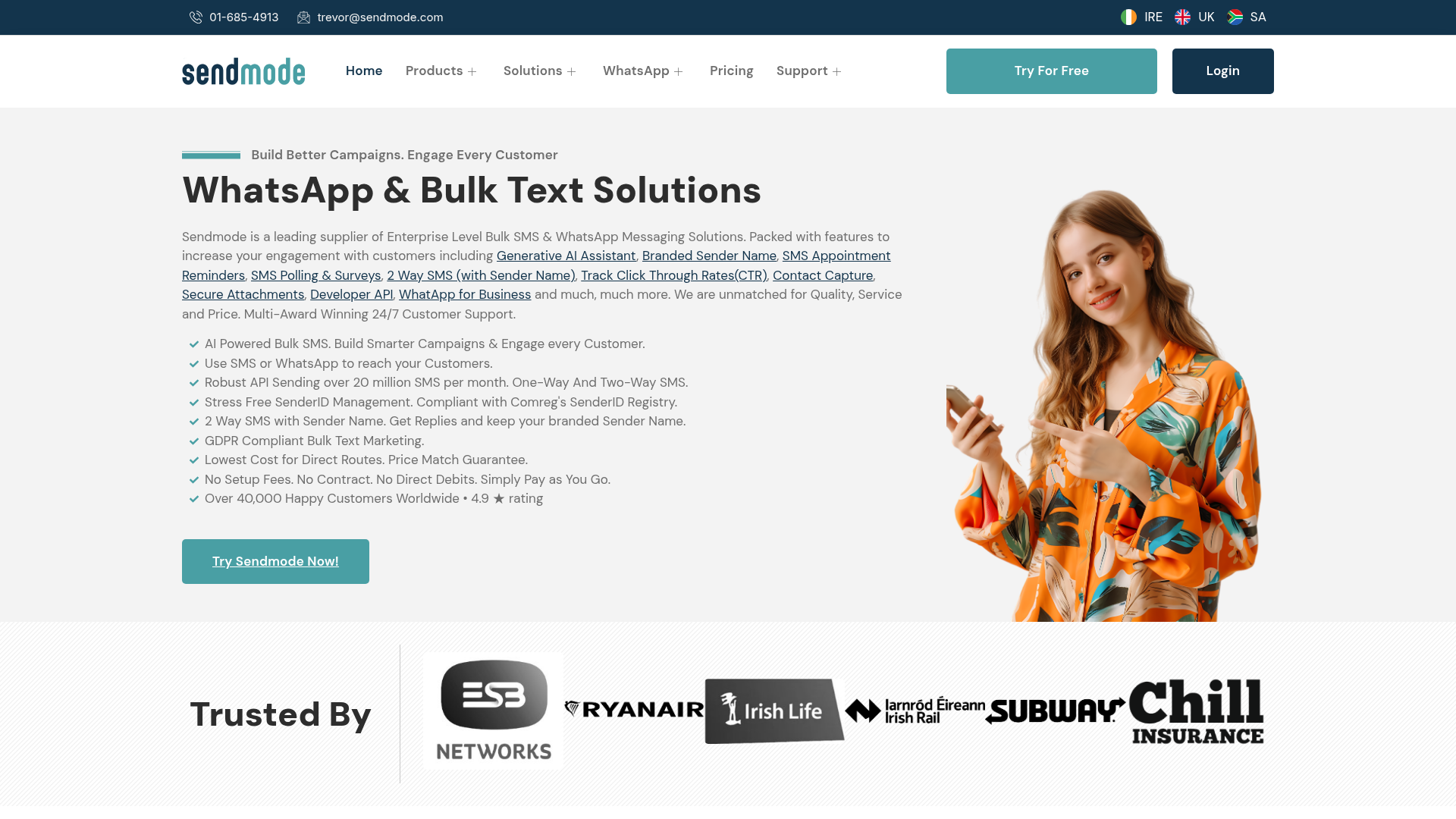
1. Sendmode
At a Glance
Sendmode gives businesses a straightforward, reliable way to handle Bulk SMS communication. It works for organisations that need to reach people quickly without bringing in a large enterprise system. For teams in Ireland and the UK, that makes it feel especially relevant, with compliance, simple workflows and reliable delivery kept front and centre for alerts, reminders, confirmations and operational messaging. This article compares SMS, RCS and Email, but Sendmode comes out ahead because many businesses still need a channel that works on nearly every handset. It’s easy to automate and fits into day-to-day communication without adding extra hassle.
Core Features
- Bulk SMS sending for business campaigns and operational updates
- SMS API access for custom integrations and developer workflows
- Two-way SMS for replies, confirmations and support use cases
- Email-to-SMS tools for quick alert workflows
- Appointment reminders and notification messaging
- GDPR-conscious messaging support for regulated teams
- Sender ID, alerts and sector-specific communication tools
Pros
- Simple to use: Teams can get messages out fast without extra complexity getting in the way.
- Strong fit for operational messaging: It’s a good match for reminders, service alerts, school notices, community updates and staff communication.
- Useful for developers and non-technical teams: Developers can build around the API, while everyday users can handle campaigns and alerts without much training.
- Relevant for Ireland and the UK: Its positioning, use cases and compliance focus line up with what many local organisations actually need.
- Flexible workflows: Two-way SMS and email-to-SMS help messaging fit more easily into existing business processes.
Who It’s For
Sendmode is a solid fit for SMEs, multi-site businesses, schools, healthcare providers, financial services teams, retailers, clubs, charities and developers that need dependable, SMS-first communication. It’s especially handy when messages are time-sensitive, customer action matters or a team wants automation without moving up to a large enterprise communications stack.
Unique Value Proposition
Sendmode stands out because it stays practical. Some platforms try to do everything at once. That can be useful for very large technical teams, but smaller organisations may find it’s more than they need. Sendmode focuses on business messaging that handles real-world jobs: sending reminders, reaching staff quickly, collecting replies, connecting systems through an API and keeping communication compliant and manageable. Organisations choosing between business messaging channels aren’t paying for an oversized platform concept. They’re choosing a tool that helps messages reach the right people at the right time.
Real World Use Case
A healthcare clinic could use Sendmode for appointment reminders, last-minute schedule changes and follow-up prompts. The team can automate reminders, let patients send simple replies and push out urgent updates quickly when needed. Staff spend less time chasing missed appointments, while patients get clear communication. The clinic keeps its outreach organised, which makes busy scheduling easier to handle.
Website: https://www.sendmode.co.uk/
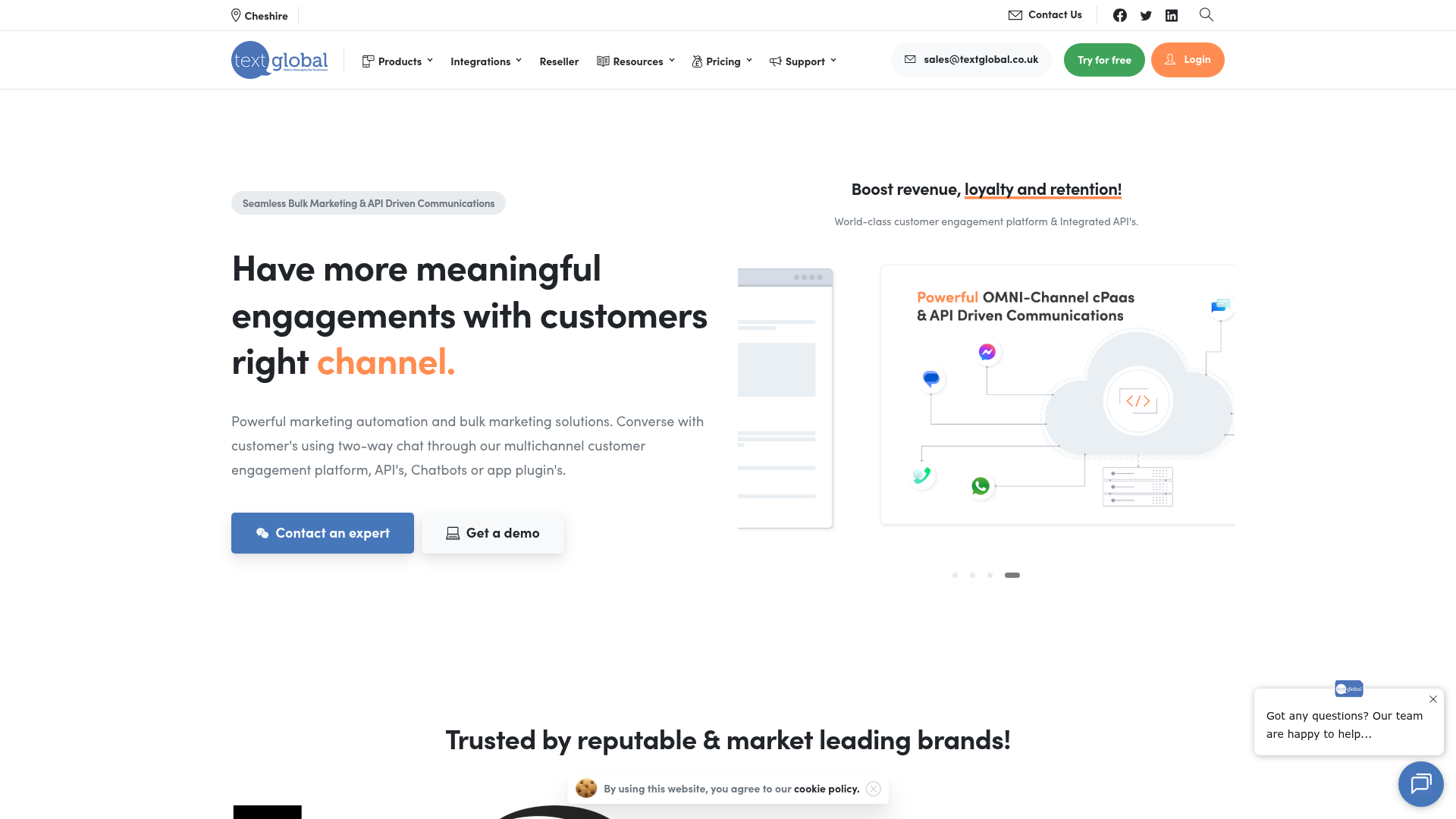
2. Text Global
At a Glance
Text Global is a straightforward omnichannel platform, with Bulk SMS, RCS and email all supported. So it makes sense for businesses that want one provider for several messaging channels, not just a pure SMS specialist. It also has a clear UK focus and public pricing for key services, which makes it easier to compare channel costs without too much digging. If an organisation wants to try richer mobile messaging alongside standard text and email, it offers more options than many SMS-only providers.
Core Features
- Bulk SMS platform
- RCS messaging support
- Email campaigns and email API
- Voice and VOIP messaging options
- API and integration support
- Delivery reporting
- Multi-channel communication setup
Pros
- True multi-channel coverage: The platform brings together SMS, RCS and email in one place.
- Public pricing visibility: Teams can compare costs before talking to sales.
- UK-focused offering: A good match for local businesses and service teams.
- Broader campaign options: It can handle both transactional and promotional messaging.
Cons
- More complex than some SMEs need: Smaller teams with simple use cases may find the wider platform more than they want.
- Less focused than a dedicated SMS-first provider: Businesses that mostly need alerts or reminders may not use the extra channels.
- Can require more planning: Teams may need clearer internal processes before a multi-channel setup really delivers full value.
Who It’s For
It’s a solid fit for businesses that want to compare and use Bulk SMS, RCS and email from one provider. It suits marketing teams, larger service operations and organisations that want room to create richer customer communications instead of sticking with straightforward text messaging.
Unique Value Proposition
Its biggest strength is breadth. Teams that want to test SMS for urgent messages, RCS for richer branded mobile experiences and email for longer-form communication can do that in one place with Text Global. That makes it one of the more relevant alternatives in an article focused on business messaging channels.
Pricing: UK SMS from 2.3p per SMS; email from £6.50, £32 + VAT per 10,000 emails; basic RCS from 2.4p per message; rich card or carousel RCS from 4.6p, 5.8p per message.
Website: https://www.textglobal.co.uk/
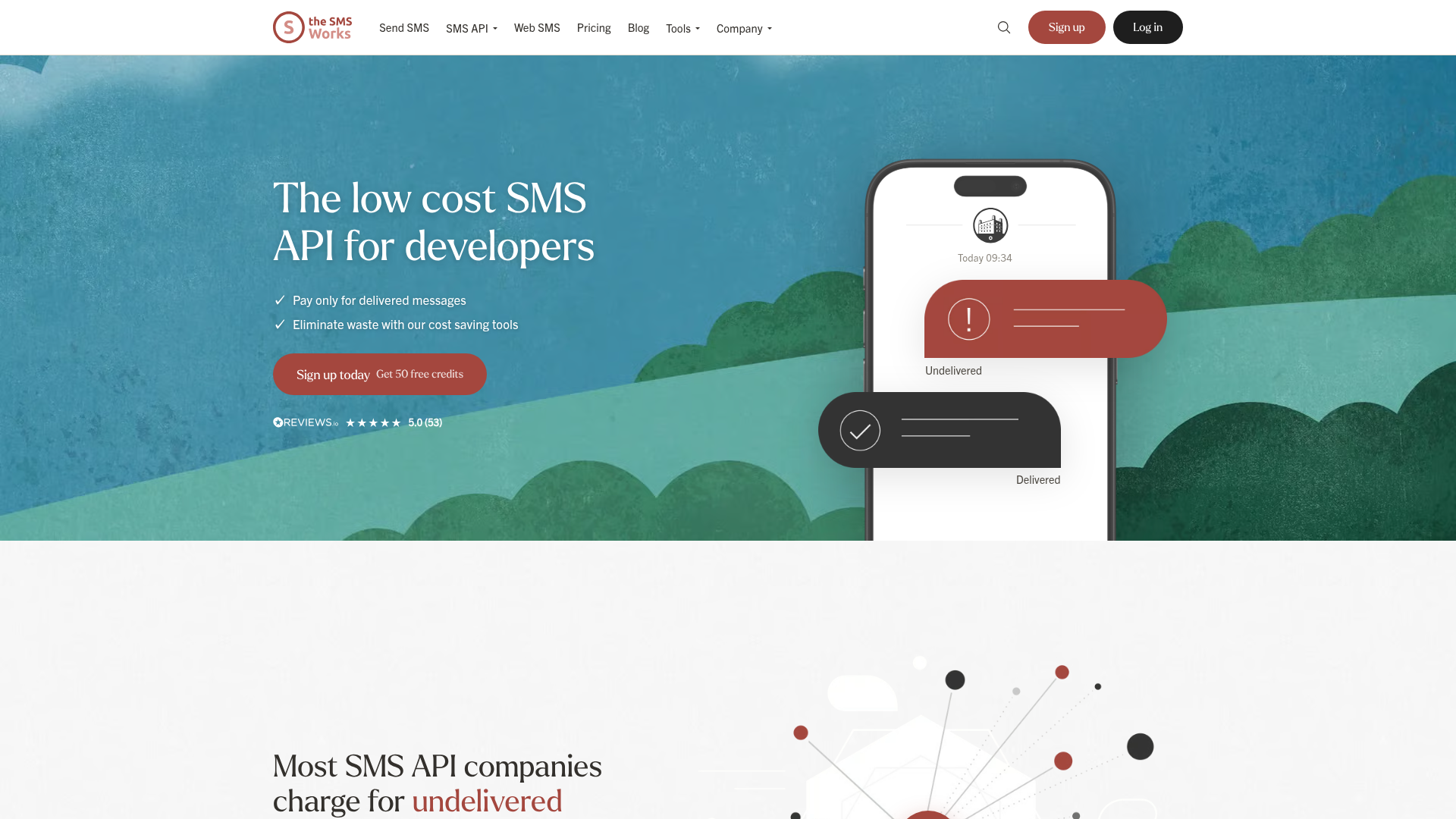
3. The SMS Works
At a Glance
The SMS Works is aimed at the UK market and keeps its attention on Bulk SMS and APIs, not a wider omnichannel platform. It comes across more as a specialist option for businesses that need business texting, developer access and solid day-to-day reliability. That tighter focus can be a real advantage when the goal isn’t adding flashy new channels, but making sure business-critical texts go out through a platform built for A2P messaging and technical integration.
Core Features
- Bulk SMS sending
- SMS API for developers
- A2P business messaging
- UK-based infrastructure positioning
- Delivery-focused billing approach
- Developer documentation
- Business messaging tools for operational use
Pros
- Strong SMS specialism: Works well for teams that already know SMS is their main channel.
- Developer-friendly: The API documentation and technical setup make it a strong option for custom builds.
- Operational messaging focus: Handy for alerts, notifications and service communications.
- UK infrastructure positioning: Useful for organisations that want a more local operational setup.
Cons
- Less omnichannel-focused: Email and RCS play a smaller role in the offering.
- Public pricing is less clear: It’s harder to compare directly up front.
- May feel technical for non-technical teams: Smaller businesses may want a simpler interface and an easier workflow setup.
Who It’s For
The SMS Works is a good match for UK businesses, product teams and developers that want reliable SMS delivery and API-led messaging. It tends to make the most sense when transactional texts matter more than managing a wider mix of channels. Technical control matters more here than having a wider marketing toolkit.
Unique Value Proposition
What stands out most is that it stays focused on SMS for teams that don’t need every messaging channel. For organisations mostly sending authentication messages, alerts, service updates or automated texts from internal systems, that kind of focus may be more useful than a broader communications suite that spreads its attention more thinly.
Website: https://thesmsworks.co.uk/
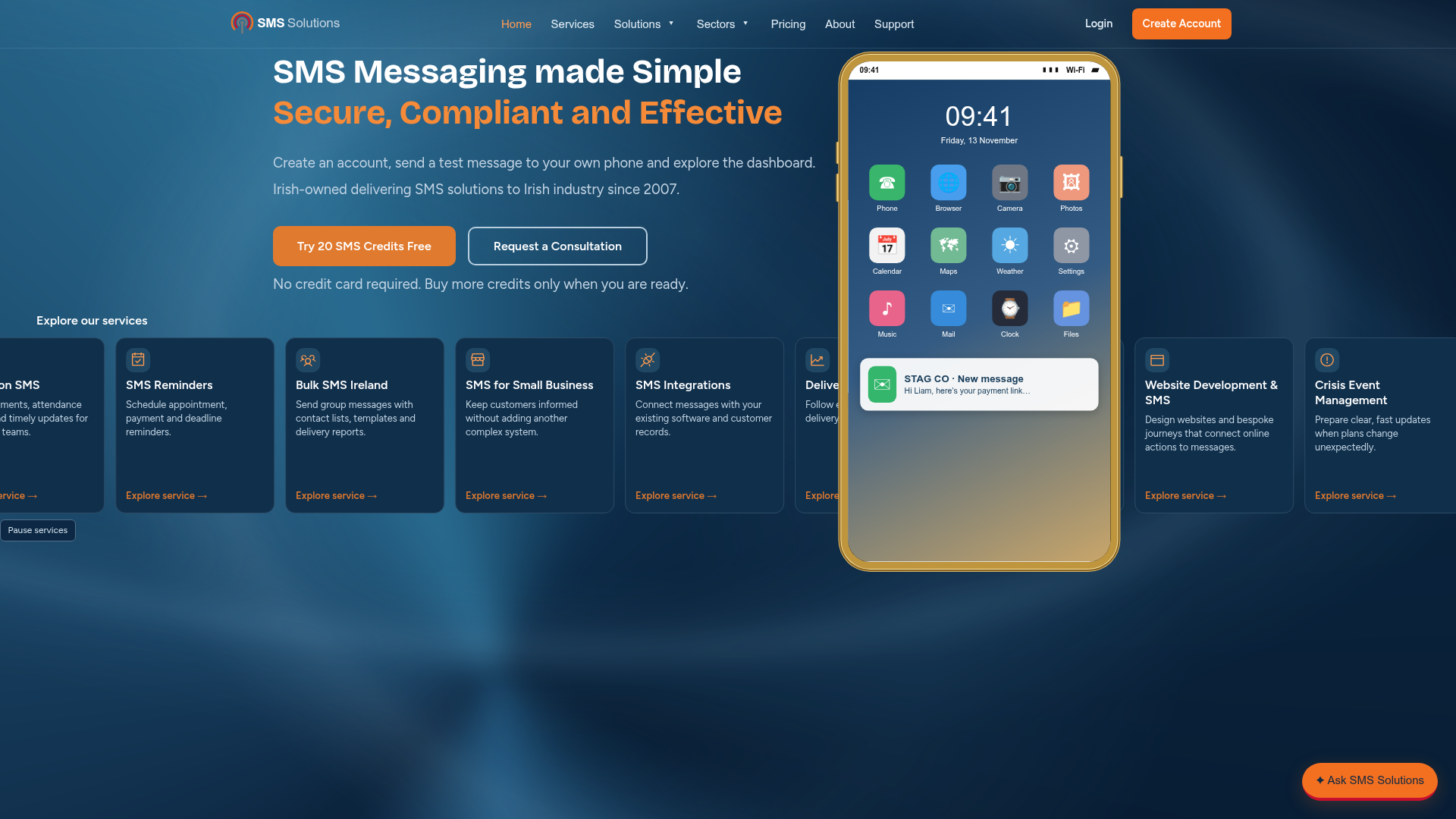
4. SMS Solutions Ireland
At a Glance
If you’re an organisation in Ireland and need business texting that fits local day-to-day work, SMS Solutions Ireland is a practical choice. It looks especially useful for schools, healthcare, retail, finance, charities, restaurants, salons and sports clubs. Unlike broader channel providers, SMS Solutions Ireland is more focused on simple SMS use than on building out a large omnichannel setup. For local organisations that want direct communication tools without added complexity, that can be a good match.
Core Features
- Bulk SMS for Irish organisations
- SMS reminders
- Group messaging
- Templates and delivery reports
- Custom sender ID
- SMS integrations
- Sector-specific messaging support
Pros
- Strong Irish relevance: Gives local organisations and community-based teams a clear advantage.
- Sector fit: Useful for schools, clinics, retailers, charities and clubs.
- Straightforward SMS setup: Works well for businesses that don’t need advanced multi-channel tools.
- Trial-friendly entry point: Free test credits mean teams can try the service before deciding.
Cons
- Primarily SMS-focused: It might not suit organisations as well if RCS and email are central.
- Limited pricing transparency: It’s harder to compare full public pricing.
- API depth is less visible: Technical teams may want to see more documentation before committing.
Who It’s For
SMS Solutions Ireland is a strong match for Irish SMEs, schools, local service providers, healthcare teams and community organisations that want simple, practical bulk texting. It’s especially suitable when communication needs are local, happen on a regular basis and stay focused on operations instead of heavier automation across several digital channels.
Unique Value Proposition
What stands out most is its local relevance and the way it fits specific sectors. Rather than positioning itself as a broad international platform, it speaks more directly to the everyday messaging needs of organisations that rely on reminders, announcements and group updates. That gives it real appeal for businesses that want simplicity and local fit to come first.
Website: https://www.smssolutions.ie/
How these business messaging channels compare in practice
If the decision comes down to channel fit, the pattern is pretty clear. Sendmode is the best all-round pick here for organisations that need SMS-first communication in practice, with automation, replies, and integration support already built in. A solid all-rounder.
Text Global is a strong option for businesses that want to handle SMS, RCS, and email in one place. The SMS Works suits teams better when they need strong technical SMS capability and broader channels aren’t the priority. For local Irish organisations, SMS Solutions Ireland makes sense when the goal is straightforward bulk texting for community or service use. Simple and local.
The longest feature list isn’t the main point. The bigger thing is how your team actually communicates day to day. SMS is most useful when messages are urgent, short, and meant to prompt action. RCS can help when richer, branded mobile interactions are the priority. Email still has a place too, especially when a message needs more detail, stronger design, or a bit more time to read.
Ready to choose a simpler messaging setup?
A lot of businesses get stuck because they assume choosing between SMS, RCS and email has to turn into a big technical project. It doesn’t. For most teams, the main thing is having a straightforward place to start: a channel that gets to people fast, covers reminders and alerts, meets compliance needs, and fits with the tools they already use.
This comparison recommends Sendmode. It’s a good fit for organisations that want business messaging to be useful and easy enough to manage. If a team runs a clinic, school, retail chain, service business, community group or software product, Sendmode gives them a practical way to manage bulk SMS, two-way communication and API-based workflows without making it a hassle. The basics, handled properly.
If your team mainly needs reliable messaging it can use every day, start with Sendmode. That means faster communication, simpler operations, and a platform built around real messaging needs.
Frequently asked questions
What should I look for when choosing business messaging channels?
Start with message type, urgency, audience, and workflow needs. For urgent short messages, SMS is the best choice. RCS fits richer mobile content where supported. Email works better for longer updates and newsletters. Then check ease of use and compliance support. Look at integration options and whether the platform fits your team size.
How do I know whether SMS, RCS, or email will work best for my business?
Start with what the customer or recipient actually needs to do. If speed matters, go with SMS. RCS is the better fit when branding and richer media matter. Email works best when the message needs detail or attachments. A lot of organisations use all three. For operational messaging, a platform like Sendmode can be a good place to start. SMS workflows tend to be simple, reliable, and easier to manage.
Are these platforms expensive for SMEs?
What you pay depends on the provider, the channel, the type of message, and the volume. Some platforms show pricing clearly. Others do not.
As a rule, SMS costs are simpler to estimate than setups for richer channels. SMEs should look at message cost, setup time, how easy it is to use, what automation options are available, and whether they really need the extra features.
How long does it take to see results from a business messaging platform?
How long it takes really comes down to the use case. Things like appointment reminders, alerts, internal notices, and service updates can start paying off right away since they improve communication immediately. Marketing and retention uses usually take longer, though, because they rely on planning, segmentation, and message quality. Teams tend to see the quickest results when they swap slow manual communication for automated messaging.
Which types of organisations benefit most from SMS-first messaging?
Schools, healthcare teams, retailers, financial services groups, trades, hospitality businesses, community organisations and businesses with multiple locations tend to get the most value. What they need is direct, time-sensitive messaging that’s easy to act on. If that fits the workflow, Sendmode is a relevant option. Built for practical SMS communication, the kind those teams rely on.
Is RCS replacing Bulk SMS and email?
Not entirely. RCS gives you more to work with, but it won’t cover every situation. SMS still plays a big part when you need reach and urgency. Email still counts too, especially when the message is longer or needs to be more formal. For most businesses, the better move is pretty simple: use each channel for what it does best instead of trying to swap one for another.